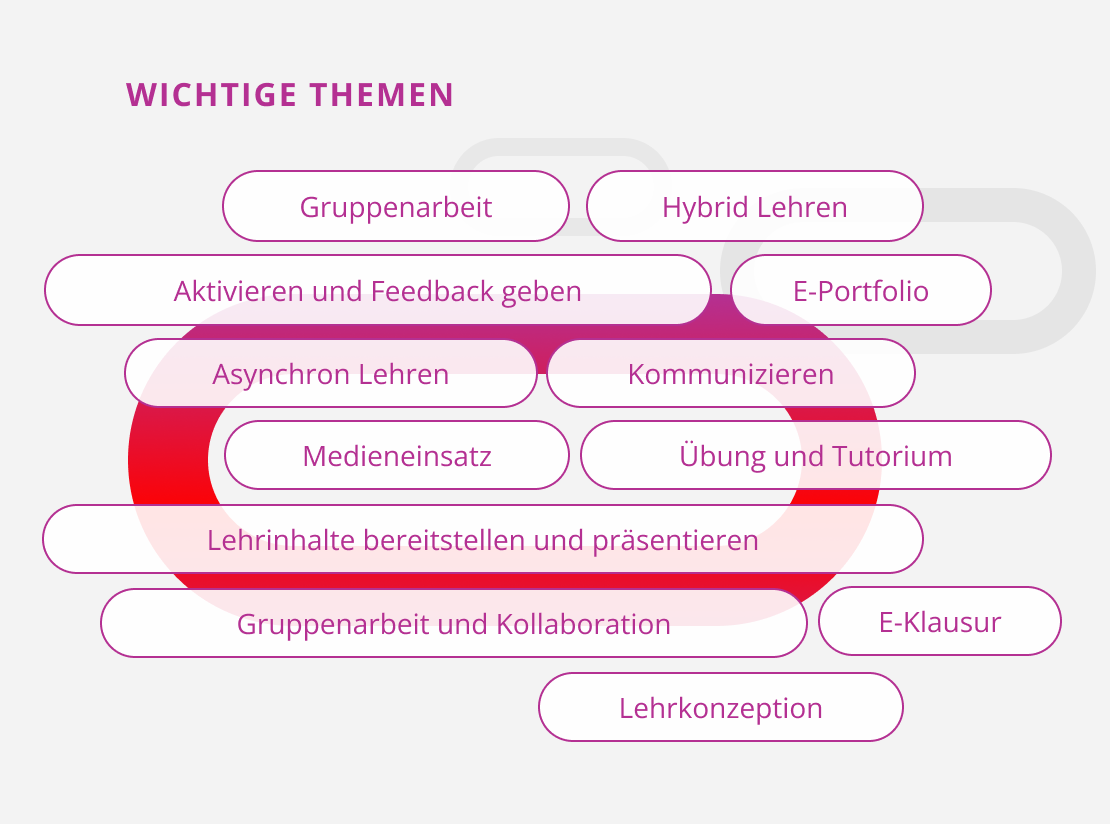
Featured Image: Key Topics: Group Work, Hybrid Teaching, Engaging Students and Providing Feedback, E-Portfolio, Asynchronous Teaching, Communication, Use of Media, Exercises and Tutorials, Providing and Presenting Course Content, Group Work and Collaboration, Online Exams, Instructional Design.

Implementation

Here you’ll discover a wide range of options for shaping your teaching. We’ll introduce various methods and useful tools that you can use to actively guide and support teaching and learning processes. You’ll gain insights into how to effectively incorporate different media, formats, and technologies into your teaching.

Implementation

Here you’ll discover a wide range of options for shaping your teaching. We’ll introduce various methods and useful tools that you can use to actively guide and support teaching and learning processes. You’ll gain insights into how to effectively incorporate different media, formats, and technologies into your teaching.

Adobe Express
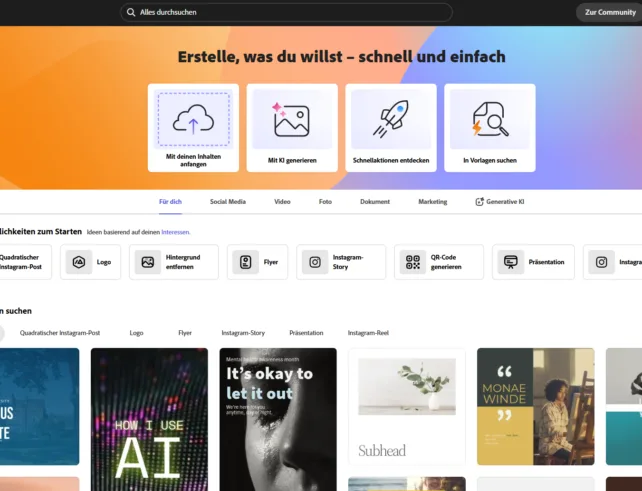
Create creative content with Adobe Express – from presentations and flyers to videos and social media posts. Adobe Express also includes generative AI tools. We’ll show you how to make the most of Adobe Express’s wide range of features.
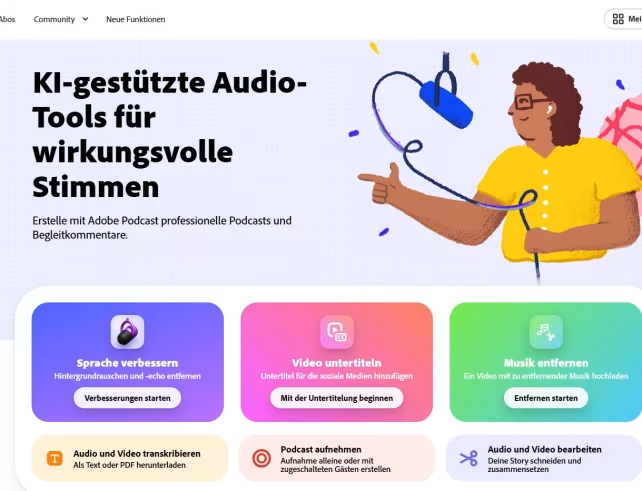
Adobe Podcast user interface featuring AI-powered audio tools and coloured function tiles, along with an illustration of a person holding a microphone.
Adobe Podcast
Adobe Podcast is an AI-powered web platform for professional audio recording and editing. It is suitable for both beginners and professionals in this field. At the tool’s core is the ‘Studio’, where users can record professional podcasts, directly in their browser – either on their own or with guests joining remotely. With Adobe Podcast, audio…
AI Toolbox
Artificial intelligence is already a factor at many universities. With the vast number of applications, teachers can quickly become overwhelmed. In addition, it is often not clear how good individual applications actually are. We present a selection of AI tools for various areas of application at the university.
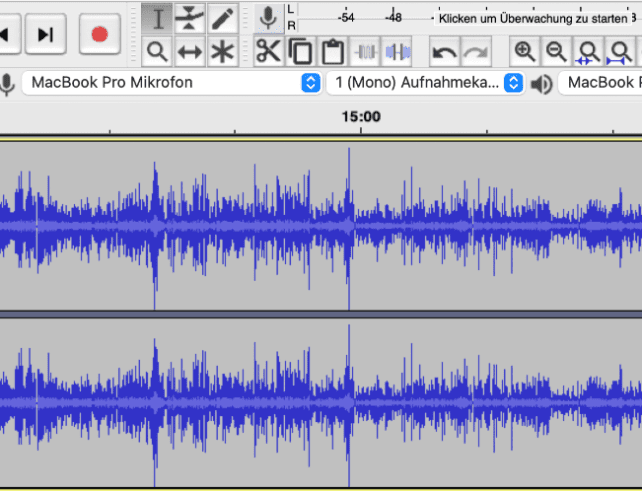
Screenshot. Two audio files open in the audio editing programme Audacity.
Audacity
Podcasts (digital audio files) are becoming increasingly popular, and they can also be integrated effectively into teaching. Their narrative elements convey knowledge in a memorable and varied way. In addition, students have the opportunity to learn at their own pace by fast-forwarding and rewinding sequences.
Featured image: A woman sitting at her laptop wearing a headset and a microphone.
Broadcast Course as a Live Stream
Participating in courses online, regardless of location, has long been possible and often makes sense—for example, for students who are temporarily or permanently unable to participate physically due to personal restrictions. In addition, if there is limited space at the university, it is easier if courses that are suitable are broadcast (in full or as…
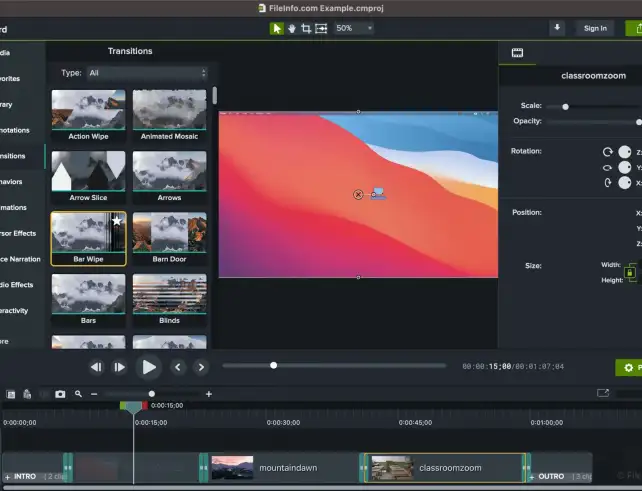
Screenshot of the Camtasia interface. Various video elements have been edited together, and a selection of transitions is available.
Camtasia
Camtasia Studio offers numerous ways and options to record, edit and publish instructional videos – without additional software. We will show you the most important functions for designing your videos.
Cover image
Carrying Out Your COIL Project
Once your course and institutional partner are confirmed, it’s time to co-develop your COIL project. In this phase, you and your partner will shape the course structure, activities, and timeline: What content will you cover? What kind of student collaboration is appropriate? And how can the courses at both institutions be meaningfully aligned? The goal…
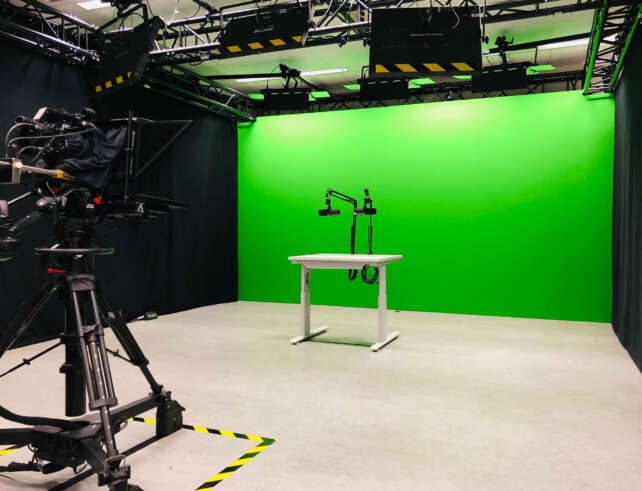
The Media Office's green-screen studio at the Deutz location, equipped with a camera and microphones
Create Educational Videos (or have them created for you)
Moving images, if put together well, can often be timeless. Die Sendung mit der Maus (The Show with the Mouse) or Löwenzahn (Dandelion) have shown that videos also work very well when teaching skills. In this guide you will find out which possibilities you have for your own educational/instructional videos and why you—in part—already have…
Designing Efficient Examinations with Scanner-Based Exams
With the examination software EvaExam, scanner-based exams can be efficiently created on a computer and partially get marked automatically after the examination. This saves time during what is often an already hectic examination phase. In this article, we present the advantages of using scanner-based exams to assess students.
Digitalization for studying and teaching – a strategy for the university
Digitalization is not only affecting our everyday lives but is also having an impact on our working lives. Digital and hybrid working methods are playing an increasingly important role in working life, so students should acquire digital skills at an early stage. The article provides a brief insight into the digitalization strategy of TH Cologne.
Student Classmate Friends Understanding Study Concept
Effective collaboration with project-based learning
Project-based learning is more than just teamwork. Using this university teaching method, students can learn from the diversity of their group members and, at the same time, contribute their skills and ideas.
Blended Learning Education Approach. Teachers and Students. Online and Place Based Teaching and Learning. Vector Illustration.
Flipped Classroom
Teaching basic knowledge and still working intensively with students? Flipped Classroom makes it possible. Students work through material individually and independently at home so that you, as the teacher, can use the classroom time for repetition, practice, and application of acquired knowledge.

Learn more. Teach better!

You might be interested in this content. Articles and instructions on digital tools and good practice examples with a high didactic effect.

We appreciate your feedback!

When developing this offer, we tried to include you as a teacher in advance. We would therefore be delighted if you would help us to further improve our offer. Please let us know what you would like, what bothers you or what you particularly like.

Would you like to contact us directly? Then write to us at lehrpfade@th-koeln.de!