


Carrying Out Your COIL Project
Once your course and institutional partner are confirmed, it’s time to co-develop your COIL project. In this phase, you and your partner will shape the course structure, activities, and timeline: What content will you cover? What kind of student collaboration is appropriate? And how can the courses at both institutions be meaningfully aligned? The goal is to create a shared learning experience that adds both academic and intercultural value—while staying realistic and feasible for all participants.
In a nutshell
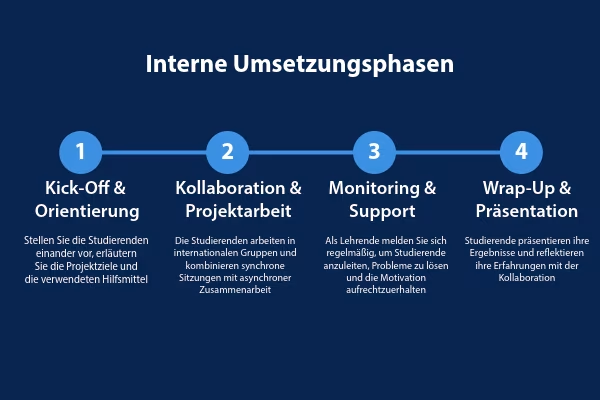
Once the collaboration begins, instructors step into the role of facilitators. Their focus shifts to guiding the process, keeping participation clear and motivating, while still leaving room for creativity and initiative. This may involve helping students get comfortable with new tools, setting expectations for group work, and ensuring everyone stays actively engaged. Regular touchpoints and constructive feedback help to maintain momentum and avoid misunderstandings.
At the same time, fostering trust and cohesion within the groups is crucial. Students often work with peers they have never met before and may need to communicate in a language that is not their mother tongue. Instructors can strengthen collaboration by creating inclusive spaces and offering structured opportunities to interact, laying the groundwork for a productive and enriching international teamwork experience.
Points of attention
- Be flexible – Expect to adapt your original plan if activities or timing don’t work out as planned.
- Stay connected with your teaching partner – Regular check-ins help avoid misunderstandings and keep both courses aligned.
- Listen to your students – Collect short feedback halfway through the project to identify issues early and make changes if needed.
Kick-Off Session
A strong start helps create momentum for the entire project. Use the first meeting to:
- Introduce both groups and the partner institutions.
- Present the learning objectives and project structure.
- Establish ground rules for respectful and effective communication.
- Break the ice and build trust through interactive activities.
Sample Icebreakers to Get Started
Map Drop (Shared Online Map): Ask students to drop a pin on a digital map (e.g., Padlet, Google Maps) showing their location and add one fun fact about their city, hobby, or favorite food. This helps visualize the diversity of the group and sparks curiosity.
Speed-Friending (Breakout Rooms): Students rotate through short breakout sessions (3–5 minutes each) with guiding questions like “What’s one course you’ve enjoyed most and why?” or “What’s your favorite way to relax after studying?”.
Zoom Background Stories: Invite students to set a virtual background that represents something personal (favorite place, hobby, or cultural symbol) and share its meaning in small groups.
Kahoot or Quiz Game: Create a fun quiz that mixes trivia about both partner countries. Example questions: “Which city is older: Lisbon or Cologne?” or “Where is the biggest cathedral in Germany?”.
This or That (Quick Polls): Run simple polls (e.g., “Tea or Coffee?”, “Mountains or Beach?”) to warm up the group. Students can briefly explain their choice, which often leads to funny or insightful exchanges.
Facilitating Collaboration
Successful collaboration in COIL projects depends on creating clear structures, shared expectations, and a supportive environment for students to engage meaningfully across cultures. Beyond assigning tasks, facilitation means guiding students to truly work together, rather than splitting tasks and working in isolation. It requires careful planning and ongoing attention from instructors to ensure balance, fairness, and engagement.
Key strategies include:
- Set clear expectations early on: Communicate the goals of the collaboration, expected outcomes, and group work norms from the beginning.
- Define roles and responsibilities: Encourage students to take on complementary roles (e.g., discussion leader, note-taker, presenter) to avoid unequal contributions.
- Use structured milestones: Break down larger assignments into smaller deliverables with intermediate deadlines to keep teams on track.
- Provide facilitation support: Regularly check in with groups through short surveys, reflection tasks, or online office hours to monitor progress.
- Encourage reflection on process: Ask students to share how they organized their work, what challenges they faced, and how they solved them.
- Balance synchronous and asynchronous work: Allow students to combine live meetings with flexible, self-paced tasks to adapt to time zones and schedules.
Intercultural Communication
Intercultural communication is at the core of COIL. Students exchange ideas across different academic traditions, languages, and work styles. This requires guidance to turn potential challenges into learning opportunities.
Another key aspect is language: COILs often run in a non-native language, and fluency levels differ. Clear, simple phrasing, written summaries, and patience can help. Remind students that ideas matter more than perfect grammar.
Practical tips
Begin with short cultural awareness or icebreaker activities.
Make expectations (e.g., deadlines, participation, and communication norms) explicit.
Encourage active listening and paraphrasing.
Provide space for slower language processing and collaborative writing.
Use reflective assignments like short reflections on what they learned from intercultural interactions and how their perspectives have shifted.
Finally, avoid stereotypes. Not every behavior stems from culture — personality, institutional norms, or individual experience may be just as important. Encourage curiosity and openness instead of relying on cultural labels.
Any questions?
Do not hesitate to reach out to us: coil-projects@th-koeln.de!