
In the final phase of a COIL project, students come together, present, and reflect on their results. They look back on their academic insights as well as the experience of international collaboration, making their joint achievements visible. At the same time, instructors evaluate the project academically, organizationally, and interculturally. This phase is essential for ensuring…
International
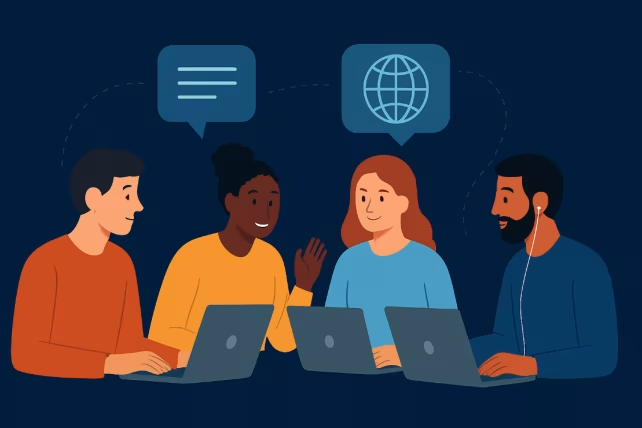
This is the stage where planning turns into practice: students from both institutions finally meet, start working together, and build their joint learning experience. The focus lies on launching the collaboration smoothly, creating trust, and guiding students through meaningful international teamwork.
Once your course and institutional partner are confirmed, it’s time to co-develop your COIL project. In this phase, you and your partner will shape the course structure, activities, and timeline: What content will you cover? What kind of student collaboration is appropriate? And how can the courses at both institutions be meaningfully aligned?
The goal…
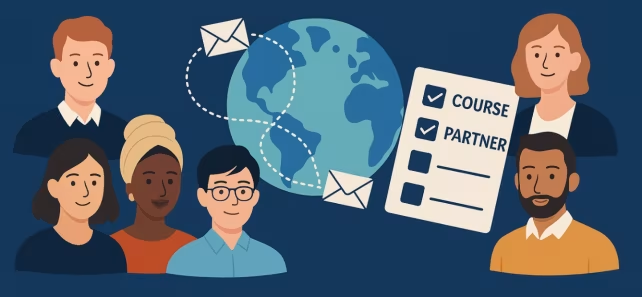
The first step in creating a COIL (Collaborative Online International Learning) project is identifying a suitable course and a partner that aligns with your academic goals. A well-matched collaboration enhances student learning by integrating diverse perspectives, interdisciplinary approaches, and real-world problem-solving. When establishing a cooperation with a teaching partner, it is important to agree on…
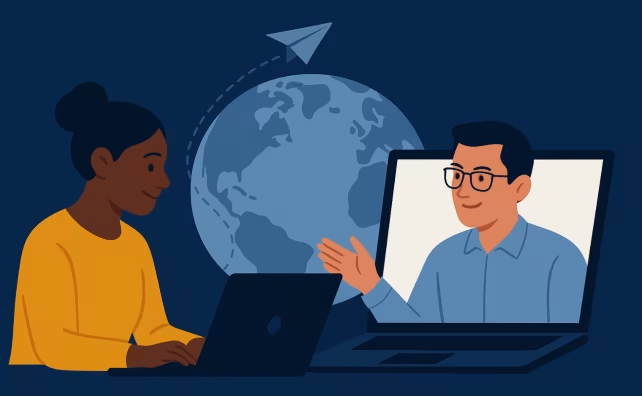
Looking to bring global perspectives into your lectures—without organizing a study abroad program? COIL (Collaborative Online International Learning) is a flexible and low-barrier way to internationalize your teaching. By teaming up with an international partner, you guide students through shared, virtual projects that build intercultural skills, digital fluency, and subject knowledge. This page introduces a…