


An illustration featuring two people framed by symbols that represent the thought process—a speech bubble, a light bulb, and gears.

Reflection & Evaluation in COIL Projects

In the final phase of a COIL project, students come together, present, and reflect on their results. They look back on their academic insights as well as the experience of international collaboration, making their joint achievements visible. At the same time, instructors evaluate the project academically, organizationally, and interculturally. This phase is essential for ensuring…

Designing Your COIL Course

Once your course and institutional partner are confirmed, it’s time to co-develop your COIL project. In this phase, you and your partner will shape the course structure, activities, and timeline: What content will you cover? What kind of student collaboration is appropriate? And how can the courses at both institutions be meaningfully aligned? The goal…

How to transfer Good Practices

Didactic design patterns (also known as patterns) document good practices in teaching. They are based on experience gained from teaching practice. The structured form of patterns allows tried and tested solutions to recurring problems to be described and published in an easily understandable way. As a result, they make good practices visible and offer a…
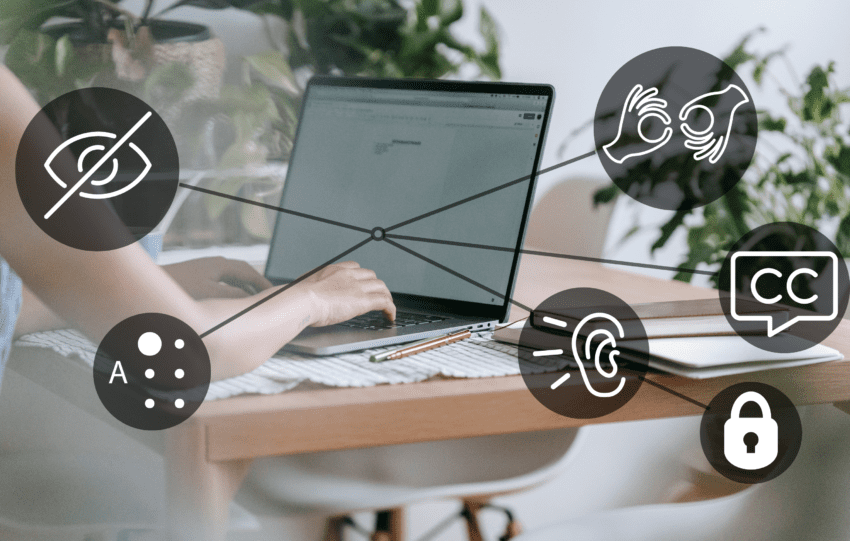
Schmuckbild: Eine Person sitzt am Laptop, zu sehen sind nur die tippenden Hände. Grafische Symbole der Barrierefreiheit kommen aus dem Laptop hervor.

Accessible teaching

Accessibility improves your teaching! This fact is often forgotten because the focus is on the perceived extra work involved. Besides, there don’t seem to be any disabled students on your course anyway – so it can’t be that important. In fact, it is easier than you might think to create an accessible environment. You can…

Setting Up a Collaborative Online International Le...

The first step in creating a COIL (Collaborative Online International Learning) project is identifying a suitable course and a partner that aligns with your academic goals. A well-matched collaboration enhances student learning by integrating diverse perspectives, interdisciplinary approaches, and real-world problem-solving. When establishing a cooperation with a teaching partner, it is important to agree on…
Latest content
Das THKI Logo auf weißen Hintergrund. Das untere Ende wird durch einen roten Streifen begrenzt.

THKI Chat

TH Köln offers its university members their own access to various large language models: THKI Chat. Lecturers, academic staff, students and administrative staff can use this didactic interface to submit inquiries to various AI models – free of charge and in compliance with data protection regulations.
An illustration featuring two people framed by symbols that represent the thought process—a speech bubble, a light bulb, and gears.

Reflection & Evaluation in COIL Projects

In the final phase of a COIL project, students come together, present, and reflect on their results. They look back on their academic insights as well as the experience of international collaboration, making their joint achievements visible. At the same time, instructors evaluate the project academically, organizationally, and interculturally. This phase is essential for ensuring…
Cover image

Carrying Out Your COIL Project

Once your course and institutional partner are confirmed, it’s time to co-develop your COIL project. In this phase, you and your partner will shape the course structure, activities, and timeline: What content will you cover? What kind of student collaboration is appropriate? And how can the courses at both institutions be meaningfully aligned? The goal…
More Posts
THEORIES AND METHODS

COIL: Internationalize Your Teaching Through Virtual Collaboration 

Looking to bring global perspectives into your lectures—without organizing a study abroad program? COIL (Collaborative Online International Learning) is a flexible and low-barrier way to internationalize your teaching. By teaming up with an international partner, you guide students through shared, virtual projects that build intercultural skills, digital fluency, and subject knowledge. This page introduces a…

TOOLS
Teaching strategy
THEORIEN UND METHODEN

COIL: Internationalize Your Teaching Through Virtual Collaboration 

Looking to bring global perspectives into your lectures—without organizing a study abroad program? COIL (Collaborative Online International Learning) is a flexible and low-barrier way to internationalize your teaching. By teaming up with an international partner, you guide students through shared, virtual projects that build intercultural skills, digital fluency, and subject knowledge. This page introduces a…
TOOLS
Lehrstrategie

Stay up to date!

You will always find out via our e-mail distribution list when there is new content on the Digitoolbox pages. We will also inform you about advisory services and events.

We appreciate your feedback!

When developing this offer, we tried to include you as a teacher in advance. We would therefore be delighted if you would help us to further improve our offer. Please let us know what you would like, what bothers you or what you particularly like.

Would you like to contact us directly? Then write to us at lehrpfade@th-koeln.de!